Modern Praise Worship Social Media: A Practical Guide to Choosing the Right Digital Presence for Your Church
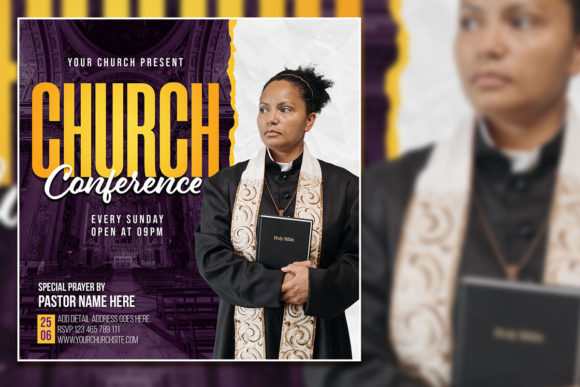
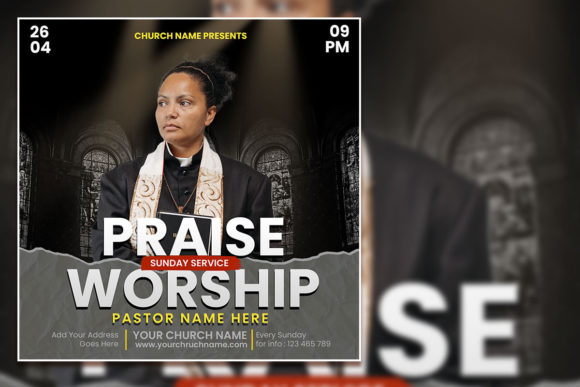
Church communications have shifted dramatically over the past decade. Congregations no longer rely solely on bulletins, announcement slides, or word of mouth to share news about services, events, and conferences. Social media has become a primary channel for reaching both existing members and newcomers. Among the many approaches churches take online, Modern Praise Worship Social Media has emerged as a distinct style that blends contemporary worship aesthetics with strategic digital outreach. But what exactly does this approach involve, and how does it compare with other ways of presenting church content online? This article walks through the key considerations to help you decide whether this style fits your congregation's needs, and how editable templates like the Modern Praise Worship Social Media Church Flyer Template can support your efforts.
What Modern Praise Worship Social Media Actually Means
At its core, Modern Praise Worship Social Media refers to a visual and tonal approach to church content that emphasizes clean design, vibrant imagery, and language that speaks to a contemporary audience. It is not tied to one denomination or theological tradition. Instead, it reflects a broader shift toward presenting worship and community life in a way that feels current, accessible, and visually compelling.
The distinctiveness lies in how it bridges traditional church messaging with modern design sensibilities. Where older church communications might rely on clip art, dense text, or dated fonts, Modern Praise Worship Social Media uses high-resolution photography, minimalist layouts, and typography that reads well on mobile screens. The color palettes tend toward warm, saturated tones or muted, earthy neutrals depending on the brand identity of the church. The overall effect is polished without feeling corporate, and warm without being casual to the point of irreverence.
This approach is not just about aesthetics. It also influences how content is structured. Posts are shorter, more visual, and designed to be consumed quickly. Event promotion, sermon series announcements, and conference invitations are presented with clear calls to action and minimal friction. The goal is to reduce barriers between seeing a post and taking a next step, whether that means RSVPing to an event, watching a sermon clip, or visiting a website.
Comparing Approaches: Editable Templates vs. Custom Design vs. Diy Tools
When churches decide to invest in their social media presence, they typically choose among three main paths: hiring a professional designer for custom graphics, using a subscription-based design platform with templates, or purchasing individual editable templates like the Modern Praise Worship Social Media Church Flyer Template. Each path has tradeoffs, and the right choice depends on your team's skills, budget, and time.
Custom Design by a Professional
Hiring a graphic designer gives you full creative control and a unique look that no other church will have. This option works well for large churches with dedicated communications staff or marketing budgets. The downside is cost and turnaround time. A single flyer or social media graphic can range from 100 to 500 dollars or more, and revisions take days or weeks. For a church that posts multiple times per week, this quickly becomes unsustainable without a full-time designer on staff.
Subscription-Based Platforms
Platforms like Canva or Adobe Express offer church-specific templates as part of a monthly or annual subscription. These are affordable and easy to use, especially for volunteers with limited design experience. However, the templates are shared with thousands of other users, so your graphics may look similar to those of other churches in your area or denomination. Customization is possible but limited by the platform's tools and font library.
Individual Editable Templates
Purchasing a product like the Modern Praise Worship Social Media Church Flyer Template sits between these two options. You get a professional-quality, high-resolution PSD file designed at 2000 x 2000 pixels with 300 dpi resolution and RGB color mode, suitable for both print and digital use. Because it is an editable Photoshop template, you can change text, swap photos, and adjust colors without starting from scratch. The layered structure makes it straightforward to replace the stock image with your own church photo for a more customized look. This option gives you a premium aesthetic at a fraction of the cost of custom design, while still allowing flexibility that subscription templates often restrict.
The tradeoff is that you need access to Adobe Photoshop and basic familiarity with editing PSD files. If your team has someone who can open Photoshop, select a text layer, and type in new content, the process takes minutes. For churches without Photoshop access, this template would not be the right fit unless paired with a volunteer or staff member who has the software.
Strengths and Limitations of the Template Approach
Understanding when Modern Praise Worship Social Media templates shine, and when they may fall short, helps you make a better decision for your specific context.
Strengths
- Speed and consistency: Once you have a template, producing a week's worth of social media graphics can be done in under an hour. Consistent branding across posts builds recognition and trust.
- Professional output: The 300 dpi resolution and 2000 x 2000 pixel dimensions mean the graphic works well on Instagram, Facebook, printed flyers, and even projection screens. You do not need to resize or rework the file for different platforms.
- Customizability within a framework: You are not locked into every element. You can change the photo, edit the text, and adjust the colors to match your church's current sermon series or event theme. The organized layer structure makes these edits simple.
- One-time cost: Unlike subscription services that charge monthly, a single template purchase covers you for as many uses as you need. For a small or mid-sized church, this is budget-friendly.
Limitations
- Software dependency: Adobe Photoshop is required. If your team uses only web-based tools or works on mobile devices, this template will not be usable without installing the software.
- Design flexibility ceiling: While you can customize text and images, the overall layout and composition are fixed. If you need a completely different orientation or a radical change in structure, you would need a different template or a custom design.
- Learning curve for non-designers: Opening a PSD file and navigating layers is intuitive for anyone who has used Photoshop before, but someone new to the software may need a short tutorial. The product description notes that you simply select text with the text tool and replace it, which keeps the process straightforward, but comfort with the interface still matters.
When Modern Praise Worship Social Media Templates Are the Right Choice
These templates tend to work best for churches that already have a clear sense of their visual identity and need efficient tools to execute it repeatedly. If your church runs multiple events each month, hosts an annual conference, or publishes sermon series graphics weekly, having a reliable template saves time and ensures nothing looks rushed or inconsistent.
Churches that are just starting to build a social media presence also benefit from templates because they remove the burden of design decisions. You do not have to worry about what font pairs well with a certain background, or whether your color combination is readable on mobile. The template handles those choices, and you focus on the message.
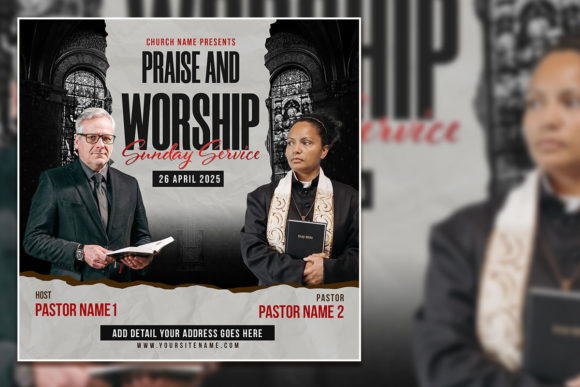
Another strong use case is conference promotion. The Modern Praise Worship Social Media Church Flyer Template, described as being suitable for church conference promotion, gives you a polished asset that can be posted across social media, printed as a flyer, and even used in email newsletters. Having a cohesive visual for a conference helps attendance and builds excitement, especially when multiple speakers or sessions need to be highlighted.
When You Might Need a Different Solution
If your church community includes people with strong design skills who enjoy creating original graphics from scratch, a template may feel too restrictive. The creative process itself can be part of the ministry for some teams, and starting with a blank canvas allows for greater expression of your church's unique personality.
For churches that operate entirely on mobile devices or use Chromebooks without full desktop software, a template that requires Photoshop will not work. In that case, a web-based platform with built-in templates would be more practical, even if it means less customization.
If your branding changes frequently, or if you serve a multicultural congregation where visual representation needs to shift regularly, a single template may not cover the range of imagery you need. You could still use the template as a base and swap photos, but you might eventually want a small library of templates for different types of content.
Practical Tips for Getting the Most from an Editable Template
Once you decide that a template like the Modern Praise Worship Social Media Church Flyer Template fits your needs, a few practices will help you maximize its value.
- Replace the photo immediately: The product allows you to swap the stock image with your own photo for a more customized look. Using photos from your actual church services, events, or community outreach makes the graphic authentic and recognizable to your audience.
- Keep a master file: Save a copy of the original PSD before you make any edits. That way, if you need to go back to the default layout, it is always available.
- Create a style guide: Note the font names, color hex codes, and spacing used in the template. If you want to create additional graphics that match, you can replicate these elements manually or in other software.
- Scale for different platforms: While the template is 2000 x 2000 pixels, which is ideal for Instagram square posts and printed flyers, you can also crop or resize it for Facebook cover photos, story highlights, or landscape-oriented posts. Just be careful to maintain the key visual elements within the safe area.
- Involve a volunteer with Photoshop skills: If you do not have design experience on staff, consider asking a church member who uses Photoshop professionally or as a hobby. Many people are happy to contribute their skills for a few minutes of editing per week.
Decision Factors to Consider
Before purchasing any template or committing to a design approach, take stock of your church's specific situation.
Team capacity: How many people are involved in communications? Do they have the time and willingness to learn basic Photoshop editing? If your team is a single pastor who also preaches, counsels, and visits members, the simpler the tool, the better. In that case, a template that is truly plug-and-play is ideal.
Content volume: How many graphics do you need per week or per month? If the answer is more than three, an editable template will save hours compared to designing each one from scratch.
Brand consistency: Does your church have an established visual identity, or are you still figuring it out? A template can serve as a starting point that helps you discover what works before investing in a full brand guide.
Audience expectations: Consider who you are trying to reach. Younger adults in their 20s and 30s are accustomed to polished, professional visuals on social media. Older adults may care less about aesthetics and more about clarity and readability. Moderate Praise Worship Social Media templates typically strike a balance that appeals to the 20–50 age range, but you know your congregation best.
Putting It All Together
Modern Praise Worship Social Media is not a single product or platform. It is a design philosophy that prioritizes clarity, warmth, and contemporary aesthetics in church communications. Editable templates like the one described in this article give churches a practical way to adopt this philosophy without needing a full-time designer or a large budget.
The key is to match the tool to your team's skills and your congregation's needs. If you have Photoshop access and a steady stream of events or sermon series to promote, a high-resolution editable template offers a fast, affordable path to professional-looking graphics. If you lack that software or prefer more creative freedom, other options may serve you better.
Whichever route you choose, the goal remains the same: to communicate your church's message clearly and compellingly, so that people in your community can find belonging, engage with worship, and take the next step in their spiritual journey. A well-designed flyer or social media post is simply a tool that helps make that connection happen.