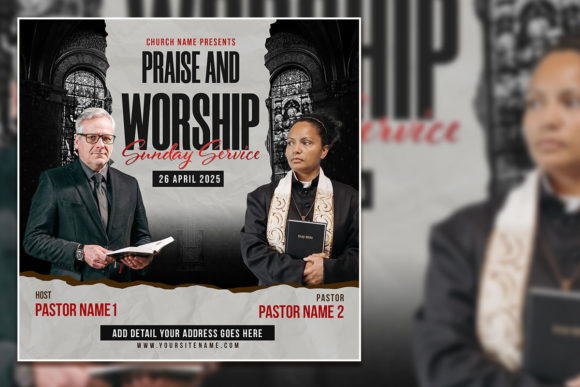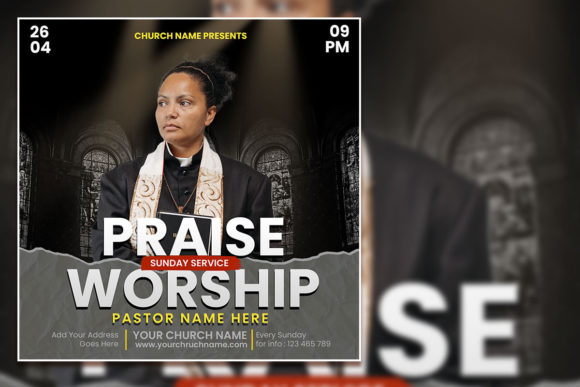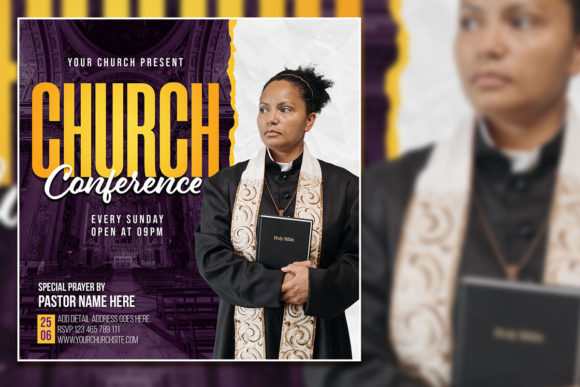
Praise Worship Social Media Post: A Practical Tool for Church Communication
If you’ve ever been responsible for promoting a church event, you know the feeling. You have a worship night, a conference, or a Sunday service that deserves attention, but the clock is ticking, and your design skills are limited. That’s where a Praise Worship Social Media Post template enters the picture. It’s not just another graphic file. It’s a shortcut to clear, professional communication that helps your community show up.
Think of it this way: you already have the message. You have the music, the speakers, and the purpose. What you need is a visual that matches the weight of what you’re offering. This template, built as a 2000 x 2000 pixel PSD with organized layers and 300 dpi resolution, gives you that visual without forcing you to become a graphic designer overnight. Let’s walk through where, when, and why this kind of resource matters for real people in real church settings.
What Makes This Template Useful in Real Ministry Settings
Before we jump into scenarios, it’s worth understanding what you’re actually getting. The template is a Photoshop PSD file, fully layered, with RGB color mode and 300 dpi resolution. That pixel count means it works across Instagram, Facebook, printed bulletins, and even projected slides. The organized layers mean you can swap out the photo, edit the text, and change the font without pulling your hair out. If you can open Adobe Photoshop and use the text tool, you can customize this flyer in minutes.
The design is built specifically for praise and worship contexts, so the visual tone already aligns with what churches typically need. But here’s the thing: you can replace the photo with your own image. That matters because authenticity is everything when you’re inviting people into a worship experience. A generic stock photo won’t resonate the way a real shot from your congregation or your worship leader will.
Sunday Service Promotion
This is the most obvious use case, but it’s also the one where most churches drop the ball. You have a service every week, and promoting it can feel repetitive. But the truth is, your audience needs a reminder. A well-designed social media post posted on Saturday evening or Sunday morning can increase attendance by 20 percent or more, especially among younger adults who check their phones before they check their calendars. With this template, you can create a consistent look week after week, just by swapping the photo and updating the sermon title or time.
Worship Nights and Special Services
Church conferences, worship nights, and special services are bigger lifts. They require more promotion. You might post a series of social media updates over several weeks. The Praise Worship Social Media Post template gives you a foundation that stays consistent across all those posts. Change the date, adjust the location, swap in a photo of the worship band, and you’re done. No need to reinvent the design every time.
Youth Group Events and Retreats
Youth leaders often struggle to create visuals that feel current without being cheesy. This template, with its clean layout and easy photo replacement, works well for youth events too. Use a candid shot from a previous retreat, add the event details, and post it on Instagram. The high resolution (2000 x 2000 at 300 dpi) also means you can print it as a flyer for the church hallway or a local coffee shop bulletin board.
Small Group and Bible Study Promotions
Not every church event is a large gathering. Small groups, Bible studies, and prayer meetings also need visibility. The template works for those quieter moments too. The design isn’t too flashy or loud, so it suits a Wednesday night study just as well as a Saturday worship rally. You can keep the same graphic identity across all your church communications, which builds recognition and trust over time.
Seasonal Campaigns like Advent or Lent
Seasonal church campaigns often require multiple posts in a short period. Advent, Lent, Easter, and Christmas can feel overwhelming for a small communications team. Having a template ready means you can focus on the message instead of the design. Change the background photo to something seasonal, update the text, and schedule your posts. That’s efficiency you can feel good about.
Who Benefits Most from This Kind of Template
Different people use this template in different ways, and the outcomes vary depending on the context.
Church Communications Volunteers
If you’re the person who got handed the church social media account because you’re “good with phones,” you probably feel underqualified to create polished graphics. This template changes that. You don’t need to know color theory or typography rules. You just need to open the PSD, select the text layer, and type. The template does the heavy lifting. You get a result that looks like it came from a professional studio, which matters when you’re representing a church to the wider community.
Pastors and Worship Leaders
Pastors often wear too many hats. If you’re preaching, leading worship, and also trying to handle communications, time is your scarcest resource. A template like this cuts down the time you spend on graphics from hours to minutes. That frees you up for preparing the actual content of the service. The photo swap feature is especially useful for worship leaders who want to feature their actual team, not a stock image of strangers with guitars.
Small Business Owners and Creative Entrepreneurs
This isn’t just for churches. If you run a creative business or a personal brand connected to faith, inspiration, or community building, the template works for you too. Use it to promote a podcast episode, a speaking engagement, or a product launch that aligns with themes of worship, gratitude, or reflection. The 2000 x 2000 pixel size fits Instagram feed posts and Facebook cover images well. Just replace the photo with something that represents your work, and keep the text concise.
Bloggers and Content Creators
Faith-based bloggers and YouTubers can use this template to announce new videos, blog posts, or live streams. The organized layers make it easy to customize the text for each announcement. If you post weekly content, having a consistent visual style helps your audience recognize your posts in a crowded feed. That recognition translates to higher click-through rates and more engagement over time.
Music Ministry Teams
Worship teams often need to promote album releases, single drops, or concert dates. The template’s design language fits music promotion naturally. Swap in a photo of the band or the album art, add the release date, and publish. The high resolution also works for physical posters if you’re putting them up at local venues or coffee shops.
What to Consider Before Downloading and Using This Template
This template is powerful, but like any tool, it works best when you use it thoughtfully. Here are a few things to keep in mind.
You need Adobe Photoshop. The file is a PSD, so it won’t open in free apps or online editors unless they support that format. If you don’t have Photoshop, you might need to use a friend’s computer or consider a subscription. Plan for that before you download.
The photo replacement matters. The template comes with a placeholder photo, but the real benefit comes when you swap it for your own image. Use a clear, well-lit photo that reflects your actual community. People respond to authenticity. A blurry selfie from last Sunday’s rehearsal will connect better than a polished stock image of strangers.
Font changes are easy but need thought. The template instructions say you can select the text with the text tool and replace it. That’s true. But if you switch to a different font, make sure it’s readable at small sizes. Social media posts are often viewed on phones, so avoid overly decorative fonts for the main information like dates and times. Save the fancy font for the title or the church name.
Resolution works for print and digital. At 2000 x 2000 pixels and 300 dpi, this template can handle both. If you plan to print it as a flyer, check with your printer to make sure the color mode (RGB) works for their setup. Some print shops prefer CMYK, but many modern printers handle RGB just fine. If you’re only posting online, 300 dpi is more than enough, and the file will look crisp on any screen.
Keep your text short. The template is square, which means you don’t have a lot of horizontal space. Prioritize the essential information: event name, date, time, location, and maybe a short tagline. Everything else can go in the caption. A cluttered post loses impact. Use the template’s clean layers to your advantage by leaving white space around your message.
Think about the visual context. What else is in your feed? If your church posts a lot of text-heavy images, this template’s design will stand out because of the photo-dominant layout. If your feed is already photo-heavy, the consistency of the template will help your posts look unified. Either way, consider how this flyer fits into your overall social media presence before you start posting.
How the Template Features Translate into Real Results
Let’s connect the features directly to outcomes, so you can see why each piece matters.
Organized layers mean you can edit without breaking the design. That’s not just a technical detail. It means a volunteer with basic Photoshop skills can produce professional work. You don’t need to train someone for weeks. You can hand them the file and say, “Change the date and swap the photo.” That saves time and reduces errors.
300 dpi resolution means the same file works for a printed flyer and a social media post. You don’t have to create two versions. That reduces duplication of effort and ensures your printed materials match your online presence. If someone sees the post on Instagram and then sees the flyer at church, they recognize the same event. That consistency builds credibility.
RGB color mode is standard for screens, which is where most people will see this. Your posts will look accurate on phones, tablets, and monitors. You won’t deal with washed-out colors or unexpected shifts. That matters because color affects emotion. A warm, saturated photo of a worship band can convey energy and welcome in ways that a dull, poorly calibrated image cannot.
Instant download means you can start editing immediately. If you just realized you need a graphic for tomorrow’s service, you don’t have to wait for a design team or a freelancer. You download the file, open it, and make your changes. In fifteen minutes, your social media post is ready to schedule. That kind of speed is invaluable in church communications, where plans often change last minute.
Text tool editing is as straightforward as it sounds. You select the text layer, type your message, and the formatting stays intact. You don’t need to adjust spacing or alignment unless you change the font dramatically. That friendliness toward non-designers is what makes this template usable by real people, not just professionals.
Photo replacement is where the template becomes personal. A generic image can communicate a generic message. But when you use a photo from your own congregation, you communicate belonging. You say, “This is us. You are welcome here.” That emotional connection is what drives people to actually show up. It’s the difference between a post that gets a like and a post that gets a filled seat.
Making the Most of Your Praise Worship Social Media Post
Here’s a realistic workflow that matches how most church teams actually operate.
Start by picking a photo from your last worship service or event. Ideally, use something with warm lighting and natural expressions. Avoid overly posed shots. The goal is to capture the feeling of being present. Open the PSD in Photoshop, select the photo layer, and replace it with your image. Adjust the positioning if needed. Then double-click the text layers and update the information. Save a copy for social media and another for print if you need it.
Post on Instagram, Facebook, or even as a WhatsApp status. If you’re promoting a recurring event like a Sunday service, set a reminder to update the template once a week. The more consistent your visuals are, the more your audience will recognize and trust them. Over time, you build a visual brand for your church that extends beyond the Sunday morning experience.
For conferences or special events, create a series of posts with the same template but different photos. That gives you a campaign feel without extra design work. Use one photo of the speaker, one of the worship team, and one of the venue. Rotate them across your social channels leading up to the event. The template handles that variety easily because the structure stays the same while the photo changes.
If you’re a content creator or entrepreneur, apply the same logic to your own work. Use the template to announce a new podcast episode, a live stream, or a product launch. The design’s praise and worship aesthetic works well for content that deals with faith, gratitude, motivation, or personal growth. You can even repurpose the template for different platforms by cropping the square image to a feed-friendly vertical or a story-friendly size in your editing software.
One final thought: don’t underestimate the power of a well-placed, well-designed post. In a world where people scroll past hundreds of images daily, a clean, professional, and authentic graphic stops the thumb. It signals that the event behind the post is worth paying attention to. That signal, repeated consistently, builds a community that actually shows up. And that’s what this template is really for: helping you spend less time on the design and more time on the people.